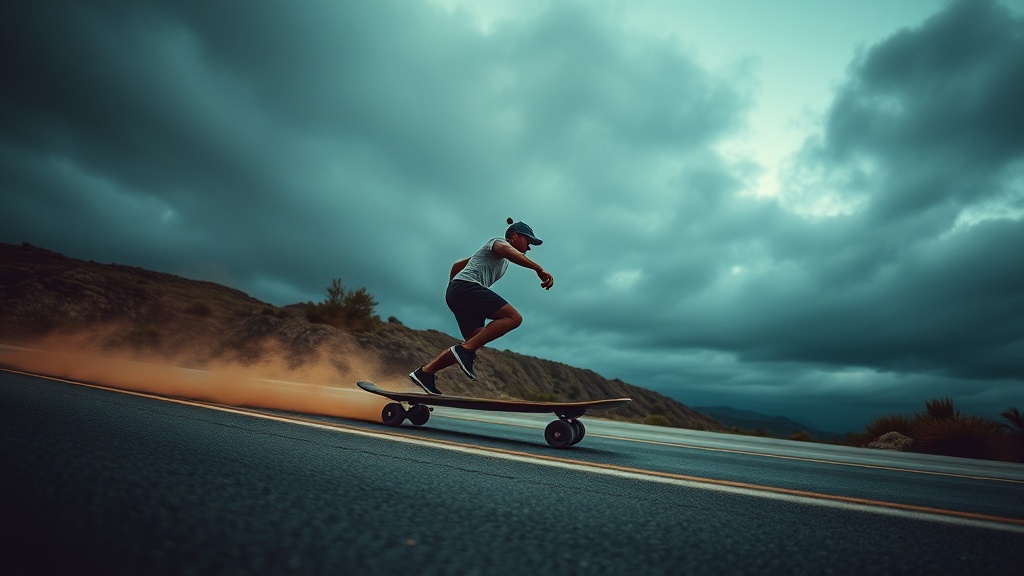
How to Build Long-Distance Pushing Endurance on a Longboard

This post breaks down exactly how to build long-distance pushing endurance on a longboard — from gear selection and training schedules to pushing technique and recovery habits. Whether the goal is completing a first IDSA race or simply cruising from Brooklyn to the Rockaways without stopping, the principles stay the same. Long-distance pushing (LDP) demands a unique mix of cardio fitness, muscular endurance, and mechanical efficiency. Get those pieces right, and twenty-mile sessions start feeling like warm-ups.
What's the best longboard setup for long-distance pushing?
The best long-distance pushing setup is a low, stable deck with large, fast-rolling wheels and trucks that minimize resistance. Pantheon's Trip and Pranayama remain the gold standard in the LDP community for good reason — both feature drop decks that bring the standing platform close to the ground, which shortens the push stroke and reduces strain on the lead leg. A lower center of gravity also means less wobble at speed and more stability when switching between pushing and coasting.
Wheels matter just as much as the deck. Seismic's Speed Vent lineup (especially the 85mm versions) rolls over rough pavement and maintains momentum with minimal effort. For riders on tighter budgets, Orangatang's Caguama wheels offer a solid blend of grip and roll speed. Trucks should feel predictable and dampened — many experienced pushers prefer Bennett or Paris 150mm trucks up front paired with a low-angle rear truck (like a Ronin or custom-modded Randall) to create a "pumpable" yet stable platform.
| Component | Recommended Option | Why It Works |
|---|---|---|
| Deck | Pantheon Trip or Pranayama | Low drop platform reduces push height and fatigue |
| Front Truck | Bennett Vector 5.0 or Paris 150 V3 | Responsive turning with stable rebound |
| Rear Truck | Ronin Cast or low-angle Randall | Reduces speed wobble, keeps rear planted |
| Wheels | Seismic Speed Vent 85mm or Orangatang Caguama 85mm | Large diameter = better roll speed and crack absorption |
| Bearings | Zealous Steel or Bones Reds | Reliable, low-maintenance, and affordable |
Don't sleep on bushings, either. A setup that feels squirrelly after mile five will chew through energy fast. Start with stock bushings, then adjust durometer based on weight and riding style. (Heavier riders usually need harder roadside bushings to prevent dive.)
How do you train for long-distance pushing without burning out?
You build long-distance pushing endurance by increasing weekly mileage gradually — roughly ten percent per week — while dedicating at least two sessions to technique and recovery. The classic mistake is treating LDP like sprint training. Pushing for miles requires aerobic capacity, not explosive power. That means longer sessions at conversational intensity, not all-out efforts that leave the legs shredded.
Here's a simple weekly structure that works for beginners and intermediate riders alike:
- Day 1 — Foundation Mileage: A flat, continuous push for 45–60 minutes at a steady pace. Think Prospect Park loop or the Hudson River Greenway. Heart rate should sit in Zone 2 — comfortable enough to hold a conversation.
- Day 2 — Technique & Switch: Shorter session (30 minutes) focused entirely on form. Practice switch pushing, foot placement, and carving to rest the lead leg. Switch stance feels awkward at first — that's normal.
- Day 3 — Rest or Active Recovery: Light stretching, foam rolling, or an easy bike ride. No pushing.
- Day 4 — Tempo Push: 30–40 minutes with segments at a moderately hard pace. Push hard for five minutes, recover for three, repeat. This builds lactate threshold.
- Day 5 — Foundation Mileage: Another 45–75 minutes at easy effort. Extend this session by ten minutes each week.
- Day 6 — Long Push: The week's longest ride. Start at 90 minutes and add 15–20 minutes weekly until reaching target event distance.
- Day 7 — Rest: Full rest. Legs need time to adapt.
The catch? Most people skip switch-stance practice and pay for it later. Relying on one leg creates massive muscular imbalances — the dominant quad and hip flexor overdevelop while the opposite side stays weak. That imbalance leads to IT band issues, lower back pain, and eventually knee problems. Spending just twenty minutes per week on switch pushing pays dividends down the road.
Is long-distance pushing bad for your knees and hips?
Long-distance pushing isn't inherently bad for joints, but poor form, abrupt mileage spikes, and the wrong equipment can absolutely cause problems. The knee takes the brunt of every push — especially when the foot lands too far forward or the knee collapses inward during the power phase. Proper mechanics keep stress distributed through the glutes, hamstrings, and calves instead of dumping it all into the patellar tendon.
Good pushing form looks like this: the front foot stays angled slightly forward on the deck, the back foot strikes the ground under the hip (not behind the body), and the push stroke drives backward with a full extension through the hip. The knee tracks over the toes — never caving inward. Think of it as a single-leg deadlift motion rather than a marching step. Short, choppy pushes waste energy and jar the joints. Long, smooth strokes generate more speed with fewer repetitions.
Foot placement on the deck matters too. Many riders stand with their front foot too close to the bolts, which forces the back leg to reach uncomfortably far. A stance width roughly equal to shoulder width allows the hips to stay square and the pushing leg to swing freely. Some LDP decks — like the Pantheon lineups — even offer multiple wheelbase options to dial in stance geometry.
"Pushing twenty miles with bad form is a fast track to patellar tendinitis. Pushing twenty miles with good form is just Tuesday." — Common refrain at IDSA events
Injury prevention habits that actually work
Warm-ups don't need to be elaborate. Five minutes of dynamic leg swings, hip circles, and ankle mobility drills before stepping on the board dramatically reduces strain. After the session, spend ten minutes rolling the quads, calves, and IT bands. Tight calves restrict ankle dorsiflexion, which forces the knee to compensate — not what anyone wants on a long push.
Strength training off the board helps just as much as time on it. Single-leg Romanian deadlifts, Bulgarian split squats, and lateral band walks build the stabilizers that keep joints tracking properly. Two sessions per week in the gym (or living room) shore up weak links that skating alone misses. Worth noting: core strength directly impacts pushing endurance. A stable midsection prevents the lower back from rounding during long sessions, which in turn protects the hips and knees.
What should you eat and drink during a long push?
For sessions under ninety minutes, water is usually enough. Go beyond that — especially in summer heat — and you'll need electrolytes and carbohydrates. A general rule: drink roughly 500ml of fluid per hour and consume 30–60 grams of carbs per hour after the first hour. That might look like a banana and a sports drink, or a few energy chews washed down with water.
Pre-ride nutrition shouldn't be complicated. A meal with complex carbs and moderate protein eaten two to three hours before rolling works well — oatmeal with peanut butter, rice and eggs, or a turkey sandwich. Avoid heavy, greasy foods that sit in the stomach. (Nobody wants to burp bacon grease up the Brooklyn Bridge incline.)
Here's the thing: dehydration hits pushing performance harder than it hits running or cycling. Runners can slow to a walk. Cyclists can soft-pedal. Pushers don't have a "coast" gear that provides full rest — even when gliding, one leg is supporting the body. That constant low-level engagement means cramping happens fast if sodium and magnesium levels drop. Carrying an electrolyte tablet or two in a pocket is cheap insurance.
Gear and apparel for comfort on long rides
The right clothing eliminates distractions. Breathable, moisture-wicking shirts and padded shorts (yes, like cyclists wear) make three-hour pushes far more comfortable. Footwear deserves special attention — flat-soled skate shoes like the Vans Old Skool Pro or Adidas Busenitz offer board feel and durability, but some distance pushers prefer stiffer-soled running shoes for energy return during the push stroke. Experiment with both.
Don't forget sun protection. A lightweight cap or buff, sunglasses, and sunscreen are non-negotiable for midday sessions. G-Form knee pads slide comfortably under pants and provide peace of mind without the bulk of hard-shell pads. If the route includes hills, a certified helmet is mandatory — the Triple Eight Gotham and S1 Lifer are popular choices in the LDP community for their ventilation and fit.
Route planning also factors into endurance. Flat, smooth asphalt beats cracked streets and steep hills every time. In New York, the Belt Parkway bike path and Ocean Parkway offer long stretches of reasonably smooth pavement with few interruptions. Out west, the Paved Wave community maintains lists of verified LDP routes in major cities.
Building long-distance pushing endurance is a process of stacking small wins — a slightly longer loop, a smoother switch push, a better-fitting truck setup. There's no shortcut, but the progression is predictable. Put in the miles, respect the recovery, and the board starts carrying you farther than you thought possible.
Steps
- 1
Dial In Your Pushing Stance and Foot Placement
- 2
Build Base Mileage with Progressive Distance Rides
- 3
Add Interval Training and Cross-Training Workouts