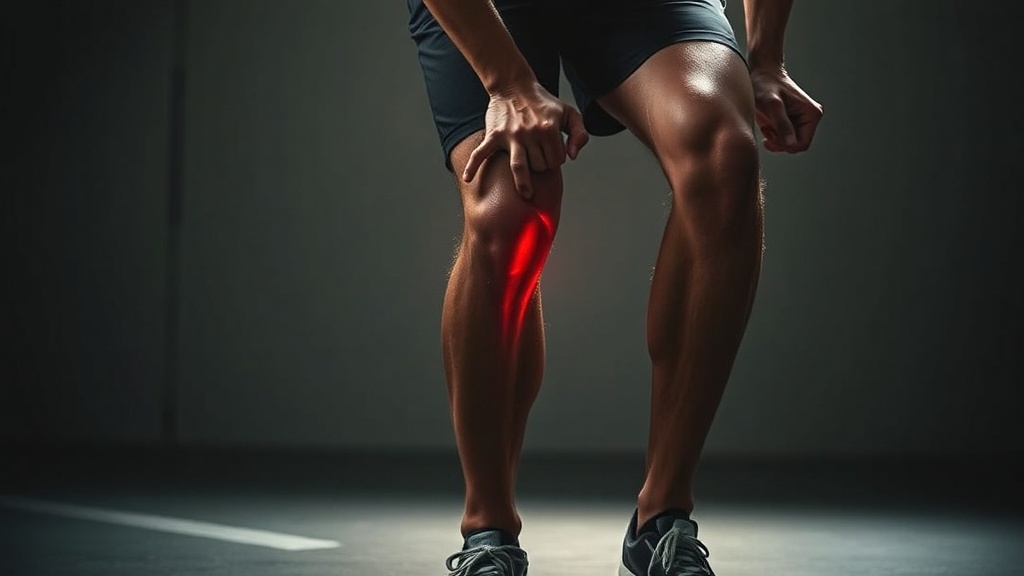
Stopping the Sharp Sting in Your Lead Knee After Long Pushing Sessions

You're halfway across the Williamsburg Bridge, the sun is reflecting off the East River, and you’re really hitting your stride. Then, you feel it—a sharp, localized sting right under your lead kneecap. It’s not the kind of ache you can just push through with a bit of grit; it feels like a physical mechanical failure inside the joint. For most of us in Brooklyn who use our boards for more than just a quick trip to the bodega, this "pushing knee" syndrome is the single biggest threat to our time on the pavement. This post covers why that lead leg is failing you and how to fix the mechanical imbalances that cause patellar pain.
Why does my lead knee hurt after pushing?
When you push a longboard, your lead leg stays bent in a partial squat for minutes at a time. This leg is responsible for absorbing every vibration from the asphalt while your other leg swings to provide power. This creates a massive amount of time under tension for the quadriceps and the patellar tendon. Most riders have a lead leg that's significantly stronger than their pushing leg, but that strength is often unevenly distributed. This imbalance pulls on the kneecap—the patella—and makes it track poorly in its groove. It’s not about just getting stronger in a general sense; it’s about evening out the tension that's yanking your joints out of alignment.
Think about the mechanics of a single-leg squat. Every time you dip to reach the ground with your pushing foot, your lead knee has to stabilize your entire body weight. If your Vastus Medialis (that teardrop muscle on the inside of your knee) is weak, your outer thigh muscles and the IT band will win the tug-of-war. This pulls the kneecap outward. Over time, this friction wears down the cartilage and causes the stinging sensation that makes you want to quit five miles early. This isn't just a matter of muscle soreness; it's a mechanical tracking issue that needs a specific approach to fix.
Can I fix knee tracking issues with specific movements?
The answer isn't sitting on a leg extension machine at the gym. You need to train the knee in the specific range of motion where it's failing you on the board. One of the best ways to wake up the VMO and stabilize the patella is the Poliquin Step-Up. You stand on a small elevation—even a thick book or a curb works—and slowly lower your heel to the ground while keeping your torso upright. This targets the last few degrees of knee extension, which is exactly where most skaters lack control. If you do this right, you'll feel a deep burn in that inner quad muscle that usually stays dormant during a long day of skating. It's a simple movement, but it's vital for keeping the kneecap centered.
Another useful tool is the isometric wall sit with a ball squeezed between your knees. It sounds like something from an old-school aerobics video, but the adductor activation forces the VMO to fire. Hold this for 45 seconds after a ride. It resets the tension and helps pull the patella back into a better position. If you're serious about long-distance pushing, these small corrections are what separate the people who skate into their 50s from the people who quit in their 20s because their knees gave out. You can find more detail on targeting this specific muscle group through resources like Healthline’s guide to VMO exercises.
"Consistency in these small, boring movements is what builds the durability needed for the big, exciting miles."
How do I build tendon durability for high-impact carving?
Tendons don't respond to training the same way muscles do. While muscles love high reps and lots of blood flow, tendons need slow, heavy, eccentric loading to actually change their structure. According to the Mayo Clinic, patellar tendinitis is often an overuse injury where the tendon can't keep up with the physical demands. To fix this, you should try Spanish Squats. Loop a heavy resistance band around a pole and then behind your knees. Lean back into a squat so your shins stay vertical. The band pulls your knees forward, and you fight it. This creates a huge amount of tension in the tendon without the joint compression of a traditional squat.
You also have to consider your foot position. If you're constantly pushing with your lead foot pointed straight forward but your hips are angled at 45 degrees, you're twisting your knee joint with every single stride. Try opening up your lead foot slightly—maybe 15 to 20 degrees—to match your natural hip alignment. This reduces the torque on the ligaments. Small adjustments like this, combined with targeted strength work for the inner quad, create a much more stable platform for those 20-mile weekend sessions. You should also examine the technical breakdown of Patellar Tendinopathy to understand how the collagen fibers in your tendon actually repair themselves over time.
| Exercise | Reps/Hold | Frequency |
|---|---|---|
| Poliquin Step-Ups | 3 sets of 15 per leg | 3x weekly |
| Spanish Squat Isometrics | 5 holds of 30 seconds | Pre-ride |
| VMO Wall Sits | 3 holds of 45 seconds | Post-ride |
The terrain you choose also plays a role in how your knees feel the next morning. Pushing through the choppy pavement of industrial Brooklyn or the vibration-heavy boards of a wooden pier sends a constant stream of micro-shocks up your leg. If your muscles are too tight, they can't absorb that energy, so the joint takes the hit. Spend ten minutes with a foam roller on your quads and hip flexors before you even step on the board. If those tissues are supple, they can act as a better suspension system. Stop looking for a magic set of soft wheels to fix your bad form; your gear isn't the problem when your inner quad is weak and your outer quad is stiff as a board.
Focus on the eccentric phase of your push—the part where you lower your body to the ground. If you’re dropping like a stone, you're putting a massive shock load on the patellar tendon. Instead, think about "melting" into the push. Use a slow, controlled descent. This not only builds better tendon health but also makes your pushing much more efficient. You'll find that you can go further with less fatigue because you aren't wasting energy fighting your own lack of stability. Keep your weight centered over the middle of the deck and don't let your lead knee cave inward towards the center of the board. That "valgus collapse" is a one-way ticket to a meniscus tear or a nasty case of runner's knee.
Check your shoes, too. If the soles are worn down unevenly, they could be forcing your foot into a pronated position, which ruins your knee alignment before you even start moving. A flat, stable skate shoe with decent arch support is better for your knees than a super-cushioned running shoe that lets your foot roll around. Your feet are the foundation, but your knees are the hinges. If the foundation is tilted, the hinges will eventually squeak and then snap. Pay attention to the feedback your body gives you on the first mile. If the sting is there early, it's time to shorten the ride and spend some time on the rug with your resistance bands.